Pretius. Built Smarter: Strategic merger as an answer to modern challenges
Pretius. Built Smarter:
Strategic merger as an answer to modern challenges

Unified digital ecosystem for a construction industry leader

pretius case study construction 1

Company

Country

–

Industry

Construction

System

Enterprise digital ecosystem / Operations & subcontractor platforms

Executive summary: Two complementary platforms connecting the office, the site, and thousands of subcontractors

01

Client

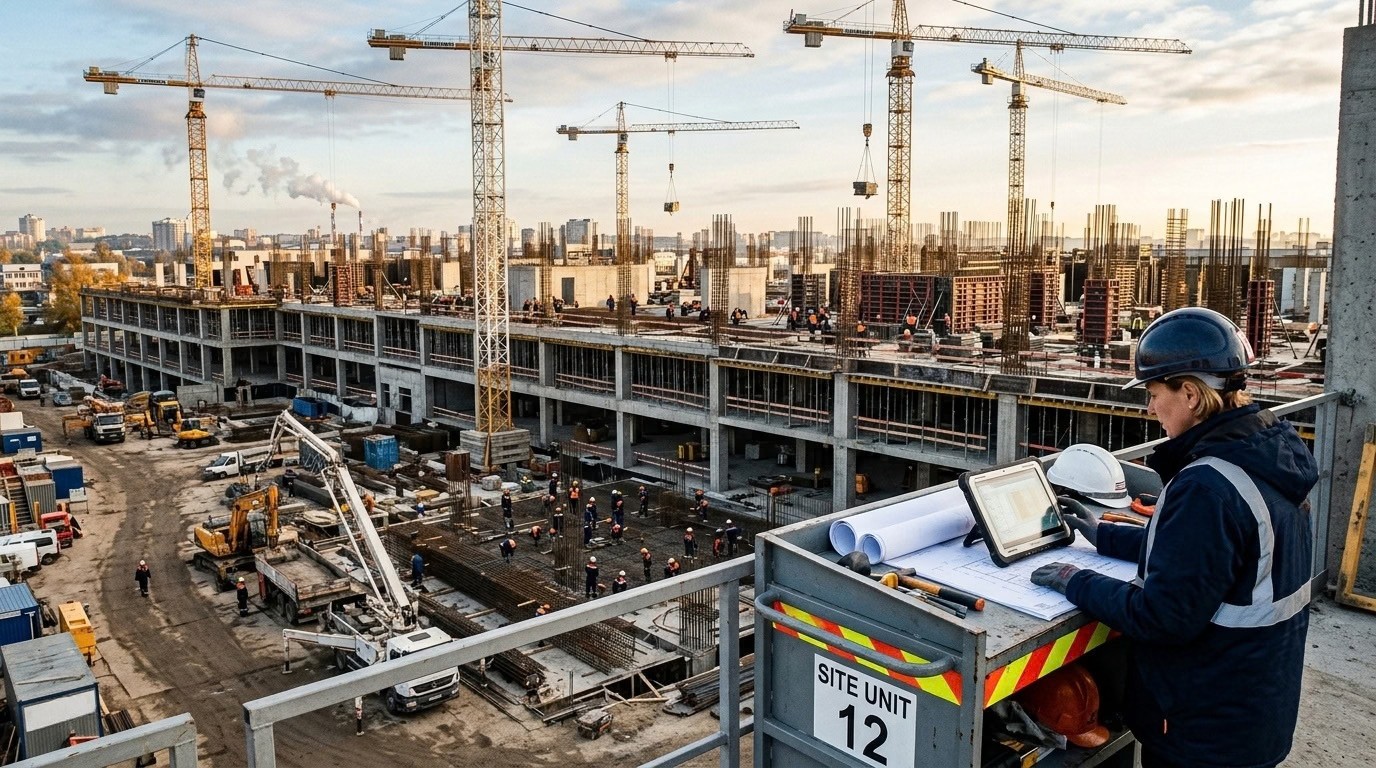
The client is a leading construction company in Central Europe, running hundreds of infrastructure and building contracts at the same time. A general contractor operating at that scale doesn't run one project, it runs a portfolio of them in parallel, each with its own workers, subcontractors, logistics, safety obligations, and finances. Keeping all of that coherent across the office, the construction site, and the supply chain is the operational challenge the whole business rests on.

02

The core challenge

The client lacked a coherent digital ecosystem that could connect office staff, engineers on site, and thousands of subcontractors. Data about work progress, safety, finance, and traffic logistics lived scattered across many separate systems, plus Excel, paper, and older desktop tools. That fragmentation made real-time reporting difficult, drove high administrative costs, and raised the risk of reporting errors, and it made it impossible to scale processes as the business grew.

03

Solution delivered

Acting as a strategic technology partner, Pretius designed and developed two complementary platforms on a single microservices architecture. The first is a central operational system for the client's staff, bringing together modules for traffic management, safety, marketing consents, and work-progress cards. The second is a portal for contractors that lets subcontractors see invoice statuses, manage their workers' data, and communicate with the general contractor. Unified under one architecture, the two platforms let data flow smoothly between the construction site and headquarters.
Key outcomes:
  • A unified operational ecosystem:
    Two platforms on one architecture digitized document flow and operational processes across office, site, and subcontractors.
  • Mobile tools that work off-grid:
    Engineers gained mobile tools usable in the field even without a network connection.
  • Transparent oversight for management:
    Leadership gained transparent insight into the financial and operational health of contracts.
  • A multi-year, expanding partnership:
    The platforms' success led to a long-term relationship and continuous development of new business modules.

Client background

The client is one of the largest construction companies in its market, managing hundreds of infrastructure and structural contracts simultaneously. The nature of that work makes digital coherence unusually hard to achieve. A single contract already spans office planners, site engineers, and a rotating cast of subcontractors; multiply that by hundreds of concurrent contracts and the organization becomes a sprawling, distributed operation where the same information, about progress, safety, money, and movement on site, needs to be visible in many places at once.

For years, the tools holding this together had not kept pace with the ambition of the business. Work was coordinated through a patchwork of Excel spreadsheets, paper, and aging desktop systems, with the data that mattered spread across systems that did not talk to each other. That is a workable arrangement at small scale and a serious liability at this one's. It made processes impossible to scale cleanly, pushed administrative costs up, and introduced the risk of errors into reporting that leadership needed to trust. To keep its competitive edge, the client needed a genuine digital transformation, not another point tool, but an ecosystem that could connect everyone from a planner at headquarters to an engineer standing in a deep excavation with no phone signal.
decorative image

The business challenge: A fragmented toolset that couldn't scale

The processes worked, but the tools behind them were scattered across systems, spreadsheets, and paper, and that fragmentation was becoming the ceiling on the business.
The core problem was dispersion. Data on work progress, safety, finance, and traffic logistics was spread across multiple systems, so nothing offered a single, real-time picture of a contract's health. Around those systems sat Excel, paper, and old desktop applications, filling gaps in ways that were impossible to scale and easy to get wrong. The consequences were concrete: high administrative costs, a standing risk of reporting errors, and processes that simply could not stretch to cover a growing portfolio of contracts.

That situation created several concrete pressures:

  • Scattered operational data:
    Progress, safety, finance, and logistics data lived in separate systems, blocking real-time reporting and a unified view of each contract.
  • A patchwork of manual tools:
    Excel, paper, and legacy desktop software filled the gaps in ways that couldn't scale with the business.
  • High cost and error risk:
    The fragmentation drove up administrative cost and left reporting exposed to human error.
  • A disconnected supply chain:
    Thousands of subcontractors had no clean digital channel to the general contractor for invoices, worker data, or communication.

Why custom platforms, not a ready-made ERP

The default answer to "connect all our operations" is an off-the-shelf ERP, and the client considered that path.
It chose to build its own platforms instead, for a reason that is specific to construction rather than a general preference for custom software. Ready-made ERP systems did not offer the flexibility the industry's particular problems demanded. Two examples make the point. First, offline operation on site: an engineer in a deep excavation or on a stretch of motorway often has no network at all, and a system that assumes connectivity is worthless there. Second, controlling physical signaling: managing on-site traffic signaling is not a feature any ERP ships with. These are not edge cases for a general contractor; they are daily reality. A generic ERP would have forced the client to bend its real-world processes to fit the software, when what it needed was software shaped around the way construction actually works. Building its own platforms was the way to get that fit.

The solution: Two platforms, one architecture

decorative image
Pretius engaged as a strategic technology partner rather than a one-off vendor, and designed the ecosystem as two complementary platforms sharing a single microservices architecture. That shared foundation is what turns two separate applications into one ecosystem, letting data flow smoothly between the construction site and central office instead of stopping at a system boundary.

The internal platform is the central operational system for the client's own staff. It brings together the modules that run day-to-day operations: traffic management, safety, marketing consents, and work-progress cards. It is the tool through which the company's engineers and office staff actually run their contracts.

The contractor portal is the external-facing platform for the company's contractors. It gives subcontractors direct visibility into their invoice statuses, lets them manage their own workers' data, and opens a clean communication channel with the general contractor, turning a fragmented, largely manual relationship into a professional digital one.

The engagement has been continuous since 2024, structured around the delivery of successive modules covering traffic management, safety, finance and settlements, consents, and others, each moving through analysis, development, user acceptance testing, and rollout. It runs on a hybrid commercial model: fixed price for individual modules and time-and-materials for ongoing support. A dedicated team of, on average, eight to twelve people depending on the phase has delivered it, spanning a project manager, business analysts, full-stack and Flutter developers, QA testers, and a solutions architect. The scope was deliberately drawn: administration of the underlying Azure infrastructure stayed with the client, and changes to the external legacy systems sat outside the project, keeping the effort focused on the platforms themselves.


The delivery was built around four connected pillars:

01

The operational core

The internal system where the work is run, unifying traffic management, safety, marketing consents, and work-progress cards into one operational tool for the client's staff. Bringing these modules under one roof is what replaced a scattered toolset with a single place to run a contract.

02

The subcontractor portal

The external portal that finally connects the supply chain, letting thousands of subcontractors check invoice statuses, manage their workers' data, and communicate with the general contractor directly. It converts an error-prone, manual relationship into a transparent digital one.

03

Offline-first mobile for the field

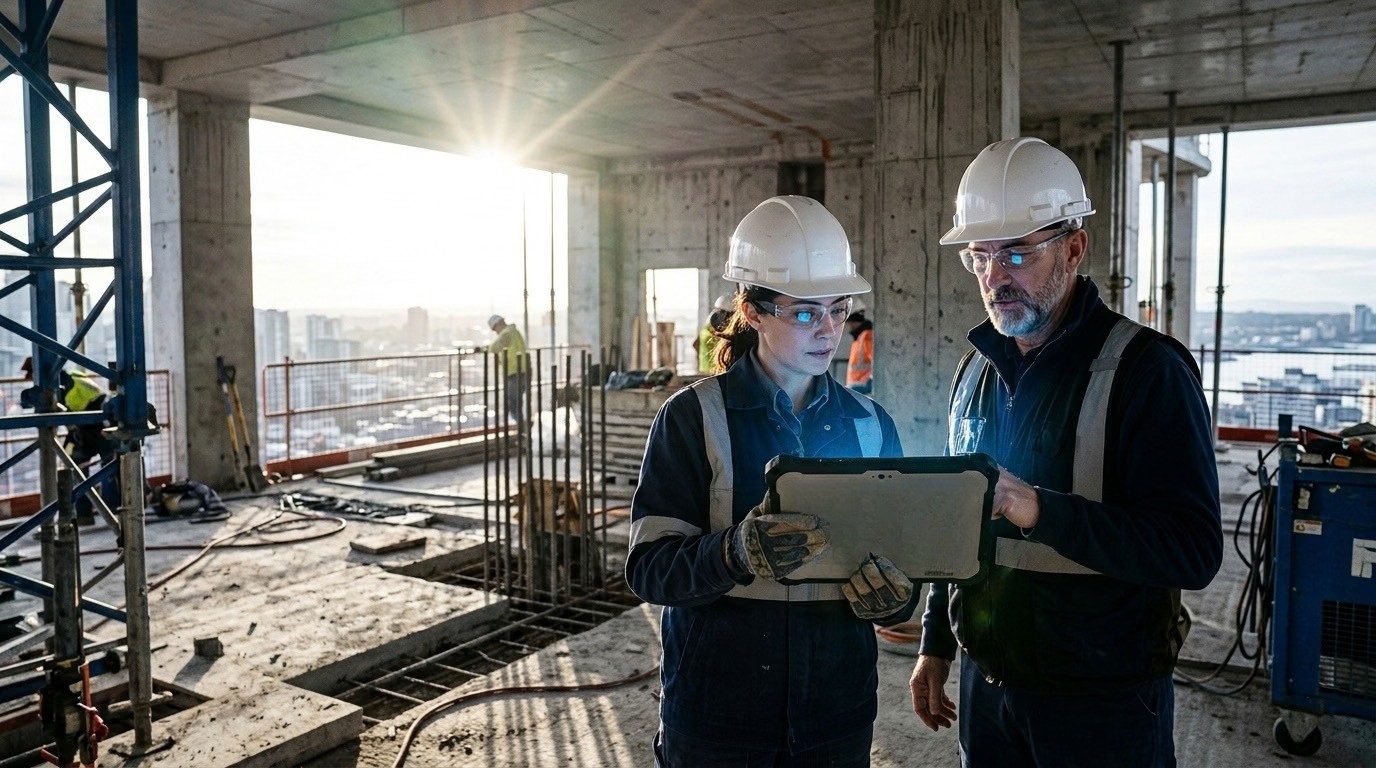
Mobile applications built for engineers who work where the network doesn't reach, backed by a strong offline synchronization module so that deep excavations and motorway sites are no longer digital blind spots. This is the capability a standard ERP could not provide.

04

Connected logistics and IoT signaling

The traffic-management capability reaches beyond software into the physical site, communicating with IoT signaling devices so that on-site traffic control becomes part of the same digital ecosystem as everything else.

Technologies and key architectural decisions

Every major decision served the same goal: an ecosystem that scales, works off-grid, and safely serves thousands of external users.
azure logo

A microservices architecture on Azure and Kubernetes

The ecosystem is built on Microsoft Azure, using Kubernetes to orchestrate its microservices. Splitting the business logic into independent services was a deliberate choice: it delivers scalability and lets each module evolve on its own, so that work on one area, such as traffic management, does not disturb another, such as safety.
flutter-logo

Mobile-first with strong offline sync

The engineers' mobile applications were built in Flutter with a strong offline synchronization module, directly answering the reality of no signal on deep excavations and motorways. Offline capability here is not a fallback; it is a core design principle of the field tools.
Keycloak logo

Shared identity with Keycloak SSO

A common identity and access management layer built on Keycloak provides single sign-on across all the applications. With thousands of external user accounts to manage, centralized identity is what keeps that population secure and administrable rather than chaotic.
Vue_js_Logonode.js logo

Web stack and legacy integration

The front ends are built in React and Vue.js and the back ends in Node.js. Communication with IoT signaling devices uses the MQTT protocol, and integration with legacy systems, including SAP and Webcon, runs through an enterprise service bus (ESB), tying the new ecosystem into the systems the business already depends on.

The team

Pretius delivered the ecosystem with a dedicated team averaging eight to twelve people depending on the phase: a project manager, business analysts, full-stack and Flutter developers, QA testers, and a solutions architect, working across fixed-price module deliveries and time-and-materials support.

Navigating the hard parts: integration, changing priorities, and security

An ecosystem that reaches from headquarters to the supply chain to physical site hardware carries real risk, and the team tracked the three that mattered most.

01

The complexity of legacy integration

Integrating with the client's legacy systems was rated a high risk, and it proved justified: gaps in the documentation for the enterprise service bus created real difficulties and extended the analysis phase by about two weeks. Naming the risk up front is what let the team absorb that delay in analysis rather than discover it later in development, where it would have cost far more.

02

Shifting business priorities mid-flight

Changing business priorities were a medium risk that duly materialized when the client introduced new safety requirements during development. Because the work was run with flexible backlog management, the new requirements could be accommodated without derailing the plan, which is exactly what an agile delivery model is for.

03

Protecting subcontractor data

The security of subcontractor data was rated a high risk, as it should be for a portal exposed to thousands of external users. The team responded with rigorous penetration testing, and the outcome was the one that matters: no security incidents.

Measured outcomes and business impact

An ecosystem that became the digital foundation of the client's operations.

Decorative image

Full digitization of document and process flow

The unified ecosystem let the client fully digitize its document flow and operational processes, replacing a patchwork of spreadsheets, paper, and legacy tools with a coherent whole.
icon-focus

Field tools that work off-grid

Engineers gained mobile tools usable in the field even without network access, closing the digital blind spots on deep excavations and motorway sites.
Decorative image

Transparent financial and operational oversight

Management gained transparent insight into the financial and operational health of contracts, turning reporting that leadership had to second-guess into a source of truth.
Decorative image

Scale and integration proven

The ecosystem serves thousands of users and integrates with more than six external systems, with support requests turned around within about one working day.
Decorative image

A standard adopted across the business

The platforms became the standard way of working on every new contract, and their success has anchored a multi-year partnership with continuous development of new modules.

Conclusion

This project shows how two complementary platforms on a shared architecture can unify a sprawling, fragmented operation, from the boardroom to a signal on a construction site.

The client did not need another disconnected tool, and it could not use a generic ERP that assumed constant connectivity and knew nothing about controlling traffic signaling. It needed an ecosystem shaped around the reality of large-scale construction: office, site, and thousands of subcontractors on one foundation, working even where there is no network. By building the internal operational core and the subcontractor portal on a single microservices architecture, delivering offline-first mobile tools in Flutter, unifying identity with Keycloak, connecting physical signaling over MQTT, and integrating the whole into legacy systems through an ESB, Pretius delivered precisely that.

The result digitized document and process flow end to end, gave engineers tools that work off-grid, handed management transparent oversight of every contract, and passed rigorous security testing without incident. The platforms are now the standard on every new contract and the foundation of the client's digital strategy, sustained by a partnership that keeps growing module by module. For any large, distributed operation held back by fragmented tools, this ecosystem is a model for what unifying them can achieve.

Looking for a software development company?

Work with a team that already helped dozens of market leaders. Book a discovery call to see:

  • How our products work
  • How you can save time & costs
  • How we’re different from other solutions

footer-contact-steps

We keep your data safe: ISO certified

We operate in accordance with the ISO 27001 standard, ensuring the highest level of security for your data.
certified dekra 27001
© 2026 Pretius. All rights reserved.