Pretius. Built Smarter: Strategic merger as an answer to modern challenges
Pretius. Built Smarter:
Strategic merger as an answer to modern challenges

How Pretius built a B2B CRM from scratch on low-code in four months

pretius case study 53

Company

Country

Central Europe

Industry

E-commerce / Consumer electronics retail

System

B2B CRM / Sales process automation

Executive summary: A centralized B2B sales CRM, delivered fast with low-code

01

Client

A major consumer electronics and IT e-commerce retailer in Central Europe, with a growing B2B arm selling to business customers alongside its core consumer operation. As the B2B business scaled, its sales process had outgrown the ad-hoc mix of spreadsheets, shared inboxes, and disconnected tools it had been running on – and the company needed a single, purpose-built system to manage it.

02

The core challenge

The retailer's B2B sales process was spread across multiple systems and communication channels. There was no central place to track leads, sales opportunities, and quotes, which made it hard to control the pipeline, easy to lose information, and impossible to see the end-to-end process at a glance. The company needed one coherent CRM to manage the entire B2B sales journey – from first contact to hand-off into back-office systems – while remaining flexible enough to absorb frequently changing requirements.

03

Solution delivered

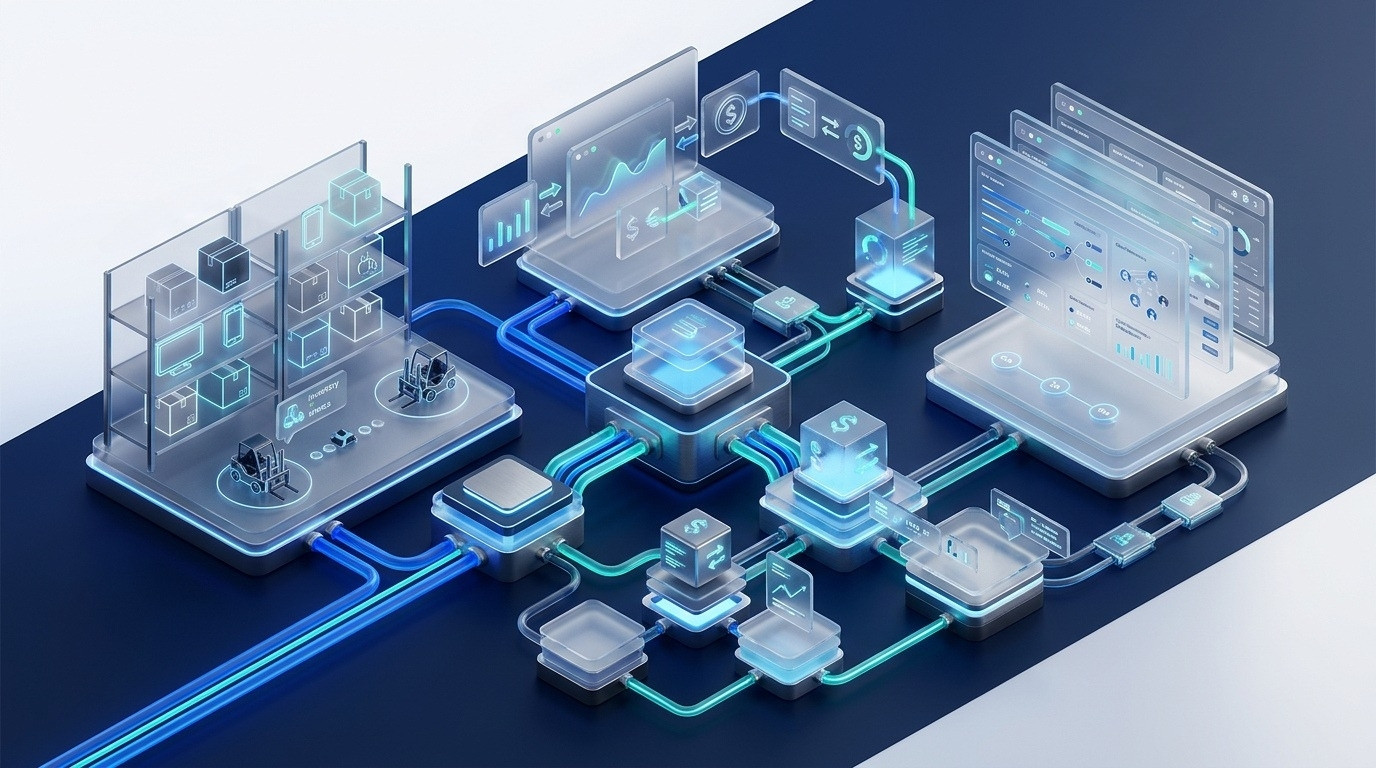
Pretius designed and built a dedicated B2B CRM on the Mendix low-code platform, delivered from kick-off to production in roughly four months. The system centralizes lead handling, opportunity management, quoting, and email into a single tool for sales representatives, and gives managers a live dashboard over the whole pipeline. It integrates tightly with the retailer's existing environment – Outlook, Microsoft Dynamics 365, Azure Service Bus, and Microsoft Entra ID – so the CRM owns the sales process while back-office systems continue to handle finalization and invoicing.
Key outcomes:
  • One system for the whole B2B pipeline:
    Leads, opportunities, quotes, and email are managed end to end in a single CRM instead of scattered across spreadsheets and inboxes.
  • Live visibility for managers:
    A dashboard surfaces every opportunity, quote, and KPI, so managers can monitor team performance and the sales process in real time.
  • Production in ~4 months:
    Low-code delivery took the system from kick-off to production release in about four months, despite frequently shifting requirements.
  • Deeply integrated, cleanly separated:
    The CRM connects to Outlook, Dynamics 365, Azure Service Bus, and Entra ID, while responsibility stays cleanly split between the CRM and back-office systems.

Client background

The client is a well-known consumer electronics and IT retailer operating primarily in e-commerce, with a dedicated B2B segment serving business buyers. That B2B operation had grown quickly — and, as often happens, the tooling underneath it hadn't kept pace. Sales was being run across a patchwork of systems and channels, with opportunities tracked in spreadsheets and coordinated over email.

For a retailer whose B2B customers expect fast, professional handling, that fragmentation was a real constraint. Without a central system, it was difficult to know where any given deal stood, to manage a sales rep's workload, or to see the shape of the pipeline as a whole. The company decided it needed a purpose-built CRM to bring the entire B2B sales process into one place — and it needed it quickly.
pretius case study 52

The business challenge: A B2B sales process scattered across tools and inboxes

Before the project, the retailer's B2B sales ran across several disconnected systems, with no single source of truth.

Two problems stood out:

  • A fragmented sales process:
    Selling happened across many tools and channels, which made the pipeline hard to control and created a real risk of losing track of leads and opportunities.
  • No central, end-to-end view:
    The existing setup gave no complete visibility into the B2B process, limiting managers' ability to monitor progress and manage the sales team effectively.
Two further realities shaped how the project had to be run. First, business requirements changed frequently, so the build had to stay highly flexible and adapt quickly rather than follow a fixed, up-front specification. Second, the initial requirements were light on detail, which meant the team had to refine them iteratively and take an exploratory approach to design and delivery – working in close, daily contact with the client.

The solution: A dedicated B2B CRM on Mendix

pretius case study 55
Pretius built the CRM as a single, central system supporting the entire B2B sales process, serving as the operational layer for sales representatives and managers and integrating with the systems already used across the organization. The platform choice — Mendix low-code — was driven by the need to deliver quickly and integrate smoothly in an environment of frequently changing requirements. Mendix's ready-made UI and backend components, predefined widgets, and strong integration capabilities let the team build functional screens and connect to external tools without implementing everything from scratch.

Where the platform's standard components weren't enough — for example, an advanced multiselect component with complex filtering and selection that the client required — Pretius built custom widgets in React embedded inside Mendix. The team also carved out a set of reusable application components (list views, wizard-style components for multi-step processes) that standardize interfaces and speed up delivery on future Mendix projects.

This was the client's first project with Pretius. It ran as a fixed-price engagement using Kanban and an iterative, Agile-in-practice approach — without classic Scrum or sprints — with daily calls with the client that enabled continuous synchronization, fast reaction to change, and quick implementation of evolving needs. Delivery moved through four connected stages — an initial analysis phase to gather requirements and map key processes, a parallel analysis-and-implementation phase that started development while requirements were still being detailed, a full implementation phase, and a finalization phase that closed out core functionality and synchronized the integrations. Core functionality was completed roughly two months before the production release, with the final phase extended to accommodate the client IT team's systems and to align the integrations between them. The whole engagement ran from kick-off through production release in about four months.


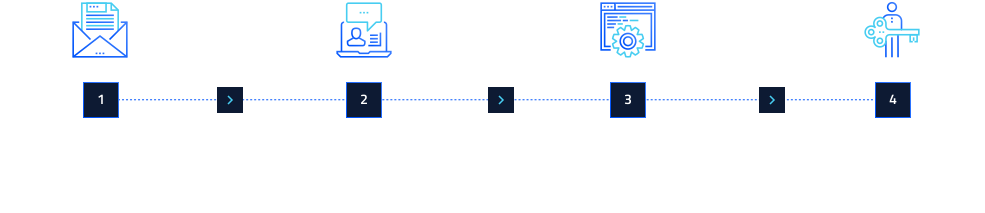
The delivery was built around four connected pillars:

01

Email handling inside the CRM

Through integration with Outlook, sales reps send and receive email directly from the CRM. Messages arriving at a shared business inbox can be assigned to existing customers or automatically create new customer records.

02

Opportunity management

Reps create and update sales opportunities in the CRM, replacing the earlier unstructured approach based on spreadsheets and email with a clear, managed process.

03

Quote creation and back-office hand-off

The system builds quotes from opportunities and passes accepted quotes to Microsoft Dynamics 365, where sales finalization and invoicing take place — keeping a clean split between the CRM's sales process and the back-office.

04

Pipeline monitoring for managers

Managers get a dashboard showing every opportunity and quote alongside key KPIs, giving them real-time oversight of team effectiveness and the whole B2B sales process.

Technologies powering the CRM

mendix-original

Mendix low-code platform

The CRM was built on Mendix (version 10.24.9), whose ready-made UI and backend components and predefined widgets accelerated development. The application runs on Mendix Cloud (a managed PaaS environment on AWS) with a PostgreSQL database, and its server-side logic is built in Java.

Custom React widgets

Where standard Mendix components fell short, custom widgets built in React and embedded in Mendix delivered the advanced interactions the client needed — plus a set of reusable components for future projects.
Microsoft_Dynamics_logo

A rich integration layer

The CRM integrates with Outlook via the Microsoft Graph API (email and calendar), exposes a REST API to synchronize customers, products, and quotes with Microsoft Dynamics 365, sends quotes to Dynamics 365 asynchronously via Azure Service Bus, and authenticates users through single sign-on with Microsoft Entra ID (SAML 2.0).

The system at a glance

The CRM brings together a set of connected modules: a dashboard of sales statistics, a shared-inbox email module, customer management with full history, lead pre-qualification, opportunity and quote management, an Outlook-integrated calendar, automatic and manual task handling, in-app notifications, a KPI module, an admin panel for users and business dictionaries, and a REST API layer for back-office integration.

Measured outcomes and business impact

A greenfield CRM that replaced a scattered process – built and shipped in a single quarter.

Decorative image

Production in ~4 months

The core system went from kick-off to production release in roughly four months, low-code delivery keeping pace with frequently changing requirements.
Decorative image

One pipeline, one source of truth

Leads, opportunities, quotes, and customer communication now live in a single CRM instead of spreadsheets and shared inboxes. New customer records are even created automatically from mail arriving at the shared business inbox.
icon-metric

Real-time oversight for managers

A dashboard of opportunities, quotes, and KPIs gives sales managers live control over the process and the team.
Decorative image

Reusable low-code assets

Custom React widgets and a library of reusable Mendix components (list views, wizards) now speed up delivery on future projects.

Conclusion

This project shows how low-code can turn a fragmented, spreadsheet-driven sales process into a single, integrated CRM in a matter of months – even when requirements keep moving.

The retailer didn't need a monolithic, multi-year platform. It needed to bring a scattered B2B sales process into one place, connect it cleanly to the tools its people already used, and do it fast – all while the requirements were still taking shape. By building on Mendix, dropping to custom React only where it mattered, and working in tight daily loops with the client, Pretius delivered a production-ready CRM in about four months: a central system that owns the B2B pipeline end to end, hands finalization off cleanly to the back-office, and gives managers the visibility they never had before.

Looking for a software development company?

Work with a team that already helped dozens of market leaders. Book a discovery call to see:

  • How our products work
  • How you can save time & costs
  • How we’re different from other solutions

footer-contact-steps

We keep your data safe: ISO certified

We operate in accordance with the ISO 27001 standard, ensuring the highest level of security for your data.
certified dekra 27001
© 2026 Pretius. All rights reserved.